

TAKEOUT BAIT.
While predicting M&A may not seem like a repeatable skill, do it long enough and you’ll start to notice patterns. Like a star pitcher whose fastball has lost its zing, you can tell when a management team has given it their all. CEO schools are big on three-year Vision Plans, and midway through their second, management starts to feel their runway growing shorter. Invariably, they’ll face pressure to either explore a transaction or cast their burden onto younger shoulders.

IDEA GENERATION.
When explaining my process, I’m often asked, ‘how do you come up with an idea?’ I usually default to the expected: ‘I read a lot,’ ‘I run screens,’ or ‘I attend investor conferences,’ but none of these strikes me as particularly unique or revelatory. Reality is far more mundane. I sift through the same raw material as everyone else, hoping to arrive at a different conclusion, or at least one that I can call my own.

IDIOSYNCRATIC.
The title of this letter is Idiosyncratic, meaning peculiar to a particular person and this portfolio is nothing if not peculiar. Few of these companies have exciting end markets, yet all have ample raw material with which to create value, much of which is within their control.

INDEX-NATION
July 3rd marks the 142nd anniversary of the first equity index, the Dow Jones Average. Published in the Customers’ Afternoon Letter (a two-page precursor to The Wall Street Journal), it consisted of eleven companies, nine of which were railroads (so much for diversification). Using little more than basic division, Charles Dow launched an industry against which trillions are now allocated.

OPPORTUNISM IN ACTION.
Investing needn’t be exhilarating to be effective, in fact, some of my best ideas have been of the get-rich-slow variety, but occasionally I make my investors a lot of money in a relatively short time-period. While not my explicit goal, I can think of worse outcomes.

PROOF POINTS.
As the fund enters its sixth quarter, we’ve started to accumulate some evidence. Since the fund began, two holdings have drawn activist attention, two dramatically shrunk their share count and one is in the process of being acquired. My goal is to find idiosyncratic returns that aren’t reliant upon a strong market for value creation which seems to be working.

What am I?
Epigram Capital exists to provide differentiated returns. I believe strongly that active management can still add value, provided your manager is willing to stay small, ignore institutional orthodoxy and resist the urge to be all things to all people. Many aren’t, which may explain why outperformance has dwindled.

SUBJECT TO CHANGE.
One of the reasons I like investing is that markets constantly change or at least they used to. When healthy, they’re naturally self-correcting, because if investors get too excited about a company’s prospects, they bid it up, lowering returns in the process. Like the childhood game King of the Mountain, the ten largest companies change every few years because no one stays on top forever. The defining characteristic of a market is flux, yet for most of my career they’ve been remarkably fluxless.

BULLS ON PARADE
In short, the bulls are on parade and caution has gone from a virtue to an insult. The recession that was ‘supposed to’ occur in 2022 failed to materialize, risk taking has consistently been rewarded and the more discriminating among us seem woefully out of synch with the times.

FALSE URGENCY.
My goal was to be intentional and deliberate when deploying your capital because the investors I admire never seem to be in a hurry. If given the choice between a reputation for excessive prudence or excessive recklessness, I know which I’d prefer. Plenty of first-time managers fizzle out of the gate, and like all good distance runners, I hope to be judged by the totality of my performance, not my first mile pace.

AFFORDABILITY CRISIS.
Did you know more Americans own a home than invest in common stocks? Or that our nation’s 85 million single family homes are worth roughly as much as the entire stock market? While AI gets all the press, housing’s contribution to the economy is more than twice that of the tech sector (but don’t tell Claude, it might hurt his feelings).

SPOILED FOR CHOICE.
This begs an obvious question; how could this fund possibly be different? In my more precious moments, I like to think it defies description, but when pressed, I usually call it opportunistic. This term is a broad catch-all for managers who bristle against the conformity of style boxes.
The fund focuses on special situations, where complexity presents the kind of opportunity that often goes uncaptured by a spreadsheet.

THE PRICE OF DISCIPLINE.
In previous letters, I’ve tried to explain how I think about scaling a new fund. Few managers get the opportunity to launch a fund de novo and their inception date leaves much to chance. Begin in 2009 and even a dart-throwing monkey will look brilliant. Start in 2021 and it would take four years to recoup your losses. Both managers may be of equal intelligence, but in the short term, their timing matters more than their skill.

Dot-Connecting.
One of the advantages of my size is that I’m able to take positions quickly without impacting a stock’s price. Today, Scholastic is the fund’s second-largest holding, approaching 7%, and was accumulated in just 27 trading days. From first purchase to now, it’s risen 45% and is the largest contributor to performance year-to-date.

RISK-SEEKING.
Since April 8th, unprofitable small caps are up 35%, those with strong balance sheets are up 19% and those that pay dividends only 14%. Occasionally markets chase risk and I find it best to let them.

HOW I’M POSITIONED.
Managers are tasked with navigating all markets and some are more difficult than others. Outperformance comes in two flavors, either going up more or going down less than the market. Both are equally valuable, but investors usually prefer the first.

It’s NOT SUPPOSED TO BE EASY.
All founders rely upon the generosity of those that want to see them succeed. Reflecting on the first year of Epigram Capital, I’m grateful for your confidence and encouragement.

TIMING IS OVERRATED
Over the long term, an investors’ timing matters less and less. In the short term, it matters a lot. A few thoughts on why I’m being circumspect (some may say cautious) when it comes to capital deployment.

REALISTIC EXPECTATIONS
Managers are rarely explicit about their expectations and often let investors get ahead of their skis. I try to be candid and realistic about my abilities as there’s a lot to be said for under-promising and over-delivering.
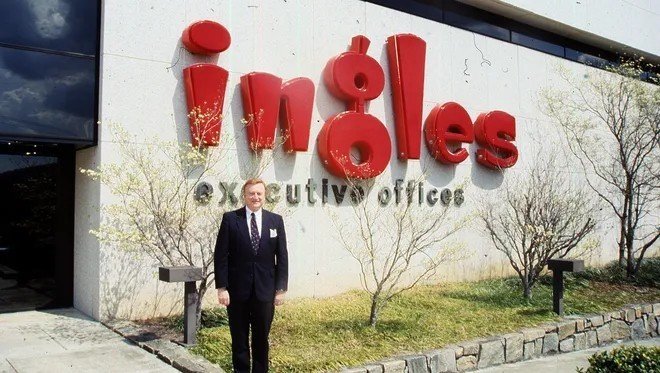
Ingles Markets: A Stock Pitch
With so many exciting companies to choose from, I chose to analyze… a grocery store. Discover why Ingles Markets’ real estate provides it a competitive advantage, its balance sheet provides strategic optionality and the company is materially undervalued.